Sustainable Livelihood through Women's Initiatives
Backyard Poultry
Promoting backyard poultry rearing enables rural households to generate additional income, improve household nutrition through egg and meat consumption, and build resilient, low-investment livelihood options that are easily adoptable in small-scale farming systems.
Liquid Fertilizer Production
Rural households are being trained to prepare organic liquid fertilizers such as Jeebamruta using locally available farm and household inputs. The production reduces dependence on chemical fertilizers and promotes sustainable agriculture, while creating an additional source of income for families.
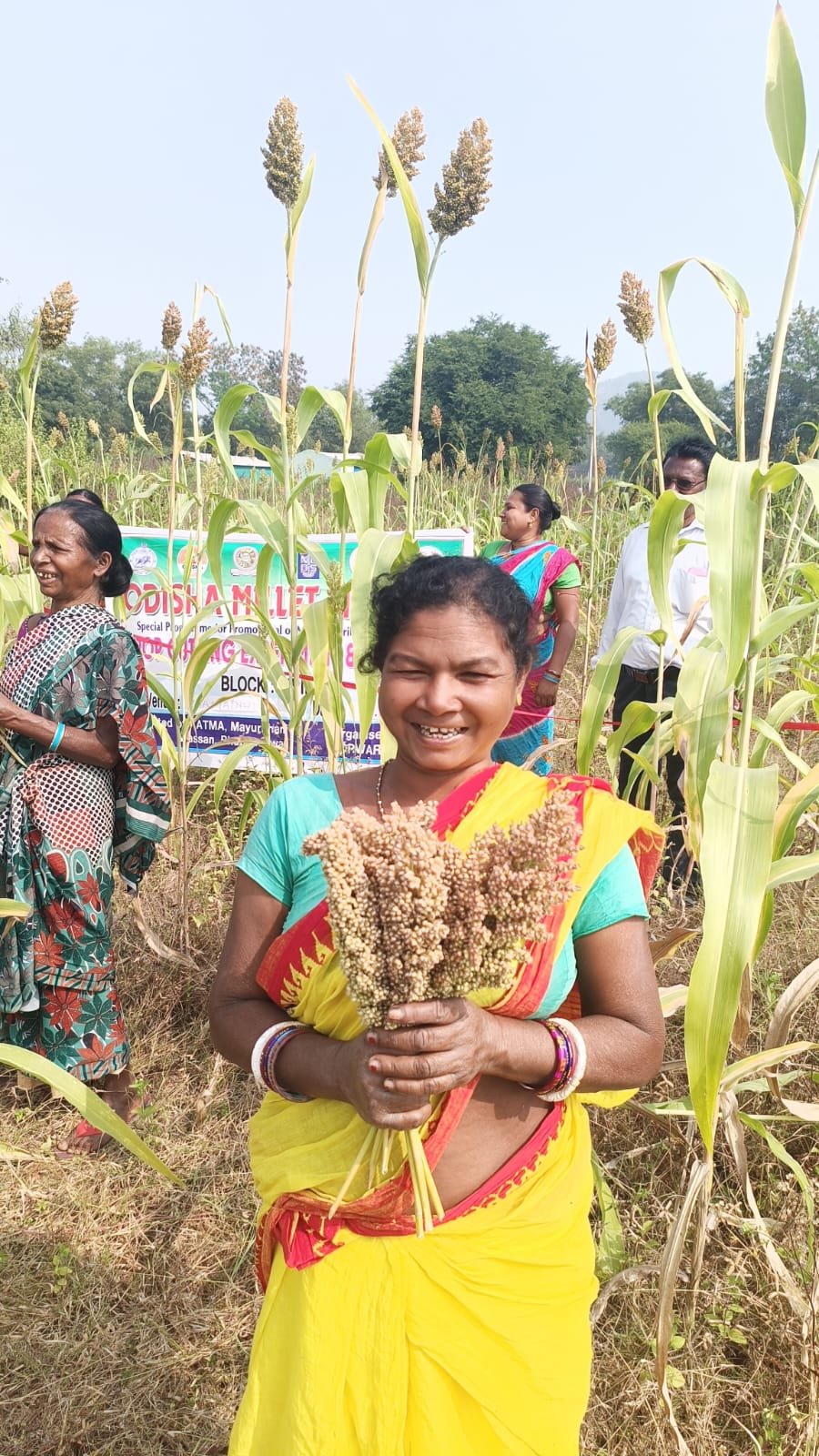
Promotion of Millet Cultivation
All our initiatives to improve the conditions for farming, the amount of farmland that is cultivable, the variety of crops and agricultural yields have improved the lives and livelihoods of women as well as men. Afforestation interventions give women the ability to collect fodder to use on their farms, or to sell at the market.
Farmers in the region generally use traditional or indigenous methods but are adopting unsustainable practices, for example high use of chemicals and diversification to include quick cash-return crops. These and other indigenous farming methods are becoming unviable as they are leading to low productivity and increased land and water degradation.
Farmers also face increasing variation in climate and weather patterns which can result in crop loss. The challenge is to make agriculture more resilient, thus sustaining food production and possibly giving farmers some income, without causing further damage to the environment.
Livestock Rearing
Livestock rearing is another dominant livelihood activity practised by most families in the region. Nearly all families own small and large ruminants, including goats. Tribal communities also rear 'country' chickens (desi birds). For these families, keeping animals represents a means of saving to protect against crop failure or family crisis.
Soil & Water Conservation
FORWARD works with farmers to enable them to utilise their farmland in the most efficient manner with the best possible agriculture practices. Following watershed or ridge-to-valley treatment, soil and water conservation activities are undertaken to ensure the fertility of soil and enhance moisture. Irrigation facilities are provided through water recharge, and water pumping and distribution systems.
Krushak Sathi Program
FORWARD provides a community-based agri-extension service through trained agriculture workers called "Krushak Sathi" who act as facilitators to encourage farmers to adopt the best agricultural practices in relation to grains, pulses and vegetables, fruit trees and livestock.
Farmer Field School
Using the Farmer Field School approach, regular farm demonstrations and training programmes in production enhancement techniques are conducted including preservation of seeds through community seed banks, preparation of nurseries and organic fertilisers, sowing methods, weeding and hoeing, harvesting and storage.
Enhancing Farmers' Income
84% of the farmers in rural parts of our work area are small and marginal farmers including small fish farming groups earning only about INR 13,000 (USD 185) annually from agriculture, livestock and fish farming. The outputs from agriculture, livestock and fish farming are usually less than the state and national averages.
A recent survey states that 30-50% of all agriculture-dependent rural households in this region are facing indebtedness. Even after a good harvest, it is a challenge for a farmer to earn any meaningful income without connectivity to markets.
FORWARD works with farmers to increase their income by identifying critical areas in the farmers' value chain and providing solutions. FORWARD uses its community-based agri-extension service model, through trained agriculture workers called "Krushak Sathis" and agriculture experts, to support these farmers at every stage of the production cycle.
Fish, Duck & Horticulture
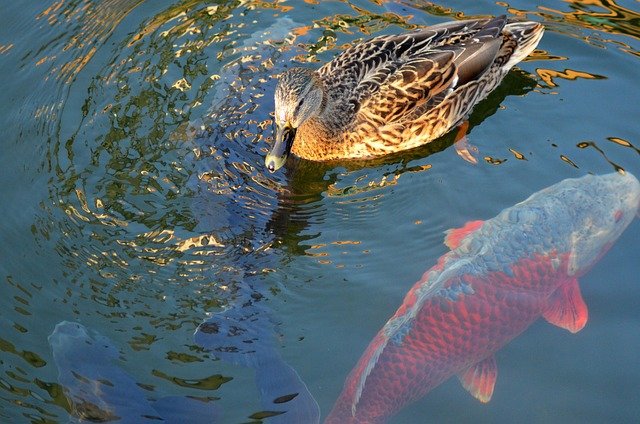
Combined Fish, Duck and Horticulture in Kujang block was started with the support from National Agricultural Bank for Rural Development (NABARD), Bhubaneswar as an initiative to help 101 small women fishers improve their income by promoting fish, duck, duck egg, banana, papaya, green leafy vegetables, sweet corn etc. for sale.
Through this intervention, FORWARD aims to increase the prosperity of the rural farming community by enhancing their entrepreneurial capabilities through links to training and credit and by giving them access to fair markets, without the need to travel long distances.
Creating Platforms for Women
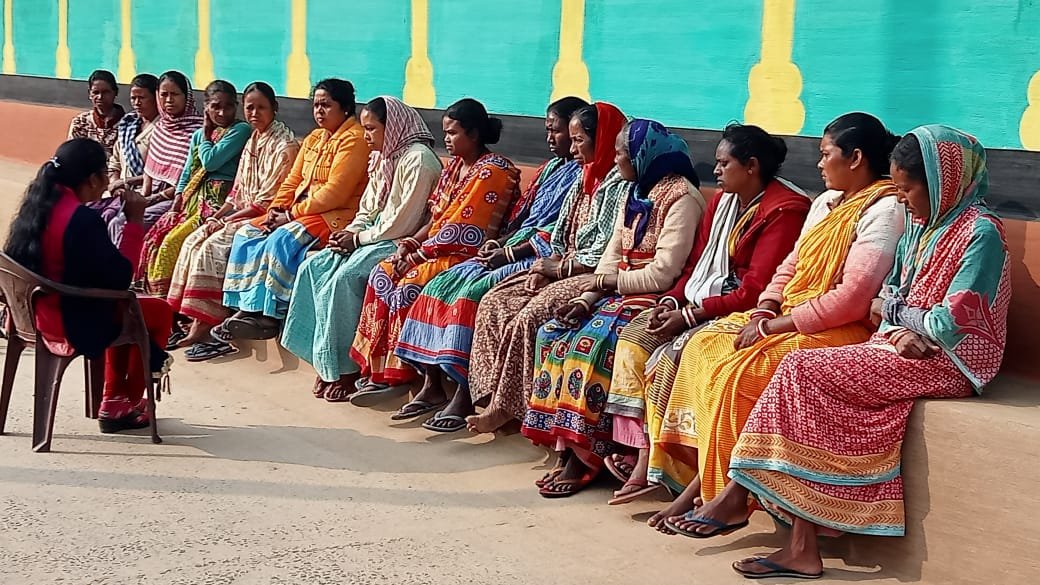
To allow women to come together and voice their concerns, FORWARD has created an array of platforms for women. These include Self-Help Groups (SHGs) and Women's Federation. More than 1500 women are associated with these platforms. In addition, FORWARD has ensured that women are represented on all Village Development Committees promoted by FORWARD.
To increase the power and reach of village SHGs, we have encouraged successful groups to form clusters (consisting of 8-15 SHGs from neighbouring areas), and federations so that issues of interest to members can be discussed and often resolved at a higher level.
Financial independence for women is life-changing, giving them the ability to make independent decisions for themselves and their family. Since the SHGs' creation, over 500 women have been given access to affordable credit and saving schemes. As a result, SHGs have accumulated more than INR 10 lakh which is available to support women further.
Women Associated with SHGs
Accumulated in SHG Savings
Women Accessing Credit
SHG Loans Used for Health, Education & Livelihood
Climate Resilient Millet Cultivation
Promotion of Millet Cultivation in Tribal Areas (Tiring), Mayurbhanj. Addressing the issue of malnutrition among children of the age group of 0-5 years through nutritious millet-based diets.
WASH Activities
Safe Drinking water, Sewage system and Concrete Cement Road at Sijuput slum, Bhubaneswar. FORWARD has implemented comprehensive WASH activities at Sijuput Slum in the outskirt of Bhubaneswar Capital City.
Nutrition & Education
Facilitation of joyful learning among 210 tribal children in Gudari, Rayagada district, Odisha, India. Addressing the issue of malnutrition among children of the age group of 0-5 years.
Afforestation & Fodder Collection
Afforestation interventions give women the ability to collect fodder to use on their farms, or to sell at the market. This enhances both household nutrition and income generation.